
A parent helps her young child brush her teeth
Pediatric dentist-backed guidance

Little teeth.
Big questions.

Clear answers about dental visits, common treatments, and caring for your child’s smile at home.

Popular:

Trusted guidance

Based on advice from leading pediatric dental groups

Easy to read

Short answers written for busy parents

Made for families

Calm, useful steps for before and after a visit

What happens at the dentist

Common treatments, made clear

Learn what each treatment does, what your child may feel, and what to do after.

20 topics to explore

A toddler lies across a parent’s and dentist’s laps for an exam.
AI-generated image · not a real patient

Knee-to-knee exam

A way to check a baby’s or toddler’s teeth while a parent stays close. The parent and dentist sit facing each other with their knees touching.

What to expect

During the visit

Your child sits facing you, then leans back so their head rests in the dentist’s lap. You can hold their hands while the dentist looks at their teeth and gums. Some children fuss or cry.

After the visit

Give your child a cuddle. They can eat and play as usual, unless a treatment such as fluoride varnish was also done.

Good to know

This position helps the dentist see small teeth. Tell the team if your child needs a break or a different position.
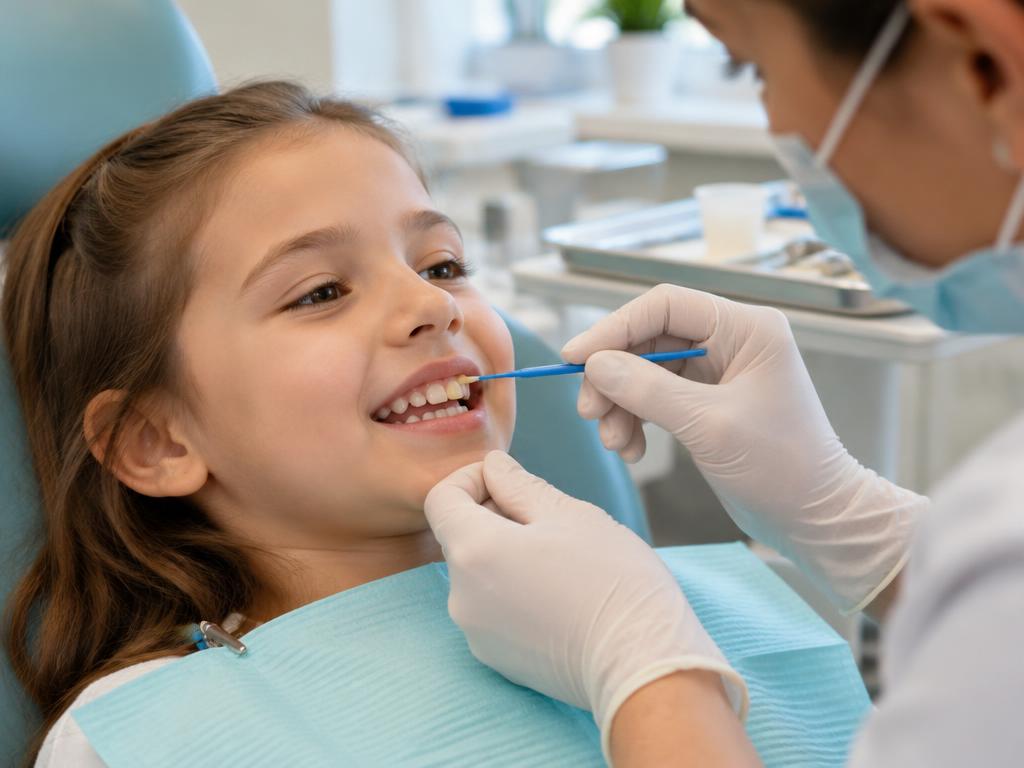
A small brush paints a thin fluoride coating onto a tooth.
AI-generated image · not a real patient

Fluoride varnish

A thin, sticky coating that helps make the outside of teeth stronger. It helps prevent cavities and can help very early decay.

What to expect

During the visit

The dentist paints it on with a tiny brush. It is quick and does not need a shot. Teeth may feel sticky or look a little dull until the coating is brushed off.

After the visit

Ask when your child can brush and what they can eat. These rules depend on the varnish used. Soft foods are often allowed, but hot or hard foods may need to wait.

Good to know

Varnish does not replace daily brushing with fluoride toothpaste. Tell the dentist about allergies before it is used.

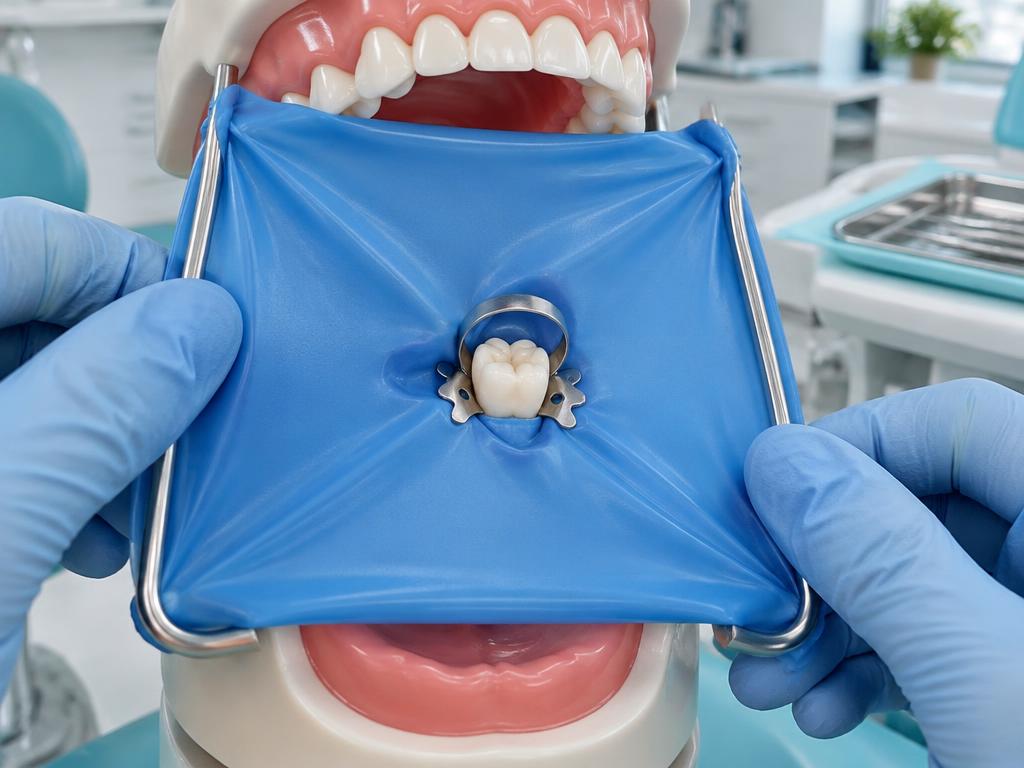
A tooth comes through a small hole in a sheet that keeps it dry.
AI-generated image · not a real patient · model shown

Rubber dam

A thin, stretchy sheet that keeps a tooth dry during treatment. The tooth shows through a small hole in the sheet.

What to expect

During the visit

A small clip may hold the sheet around the tooth. It helps keep water, bits of tooth, and small tools out of the mouth. Your child can still breathe through their nose or around the sheet.

After the visit

The dentist removes it at the end. There is usually no special care for the sheet itself. Follow the care steps for the treatment your child had.

Good to know

Tell the dentist about a latex allergy or a stuffy nose. Latex-free sheets are available. Ask for a pause if your child feels uncomfortable.

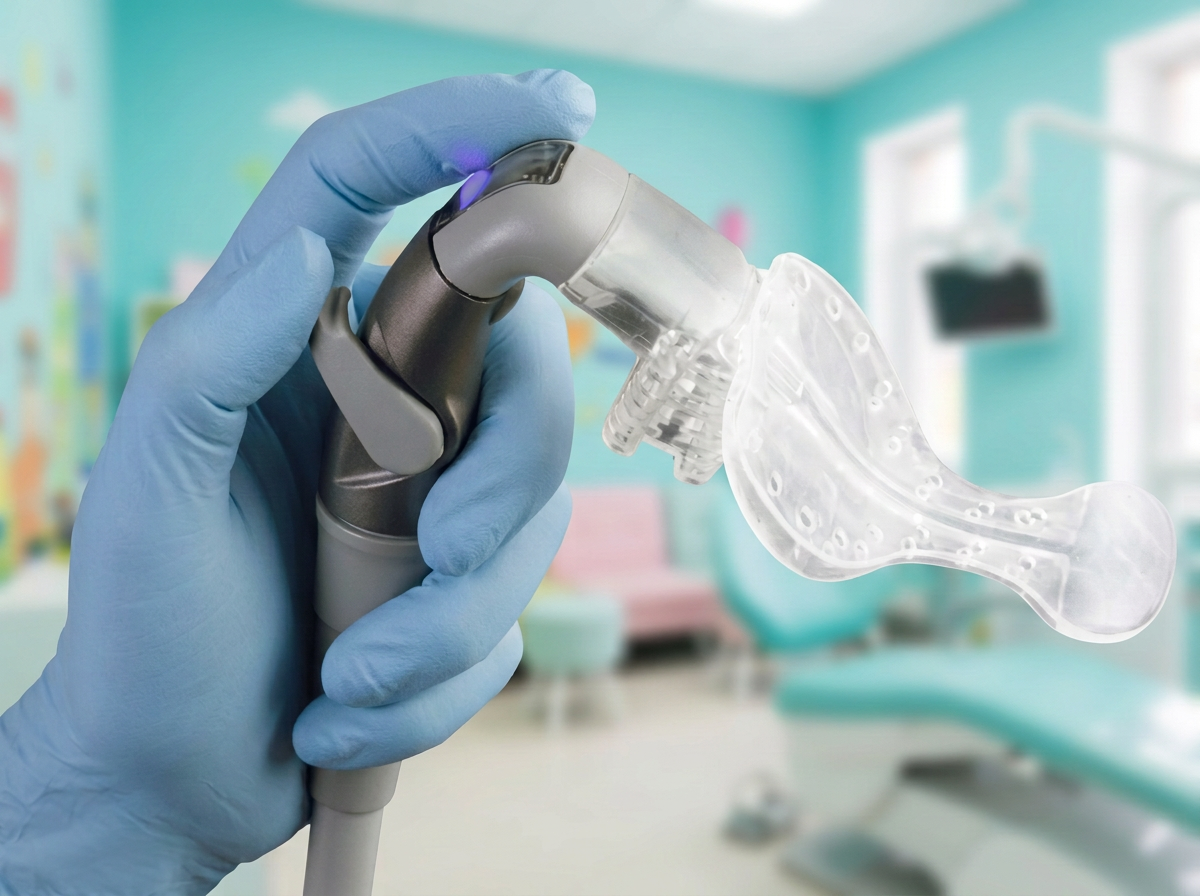
A gloved hand holds a suction handpiece with a soft clear mouthpiece that keeps the cheek and tongue out of the way.
AI-generated image · not a real patient

Isovac

A soft mouthpiece that helps keep a tooth dry. It holds the cheek and tongue away, helps the mouth stay open, and sucks up water and spit.

What to expect

During the visit

The dentist fits a mouthpiece to your child’s mouth and connects it to a suction tube. Your child may hear a sucking sound or feel that the mouthpiece takes up space.

After the visit

The mouthpiece is removed when the work is done. Follow the care steps for the filling or other treatment, not for the mouthpiece.

Good to know

Isovac is a brand of dental tool, not a medicine. Tell the team if your child gags or feels uncomfortable so they can adjust it.

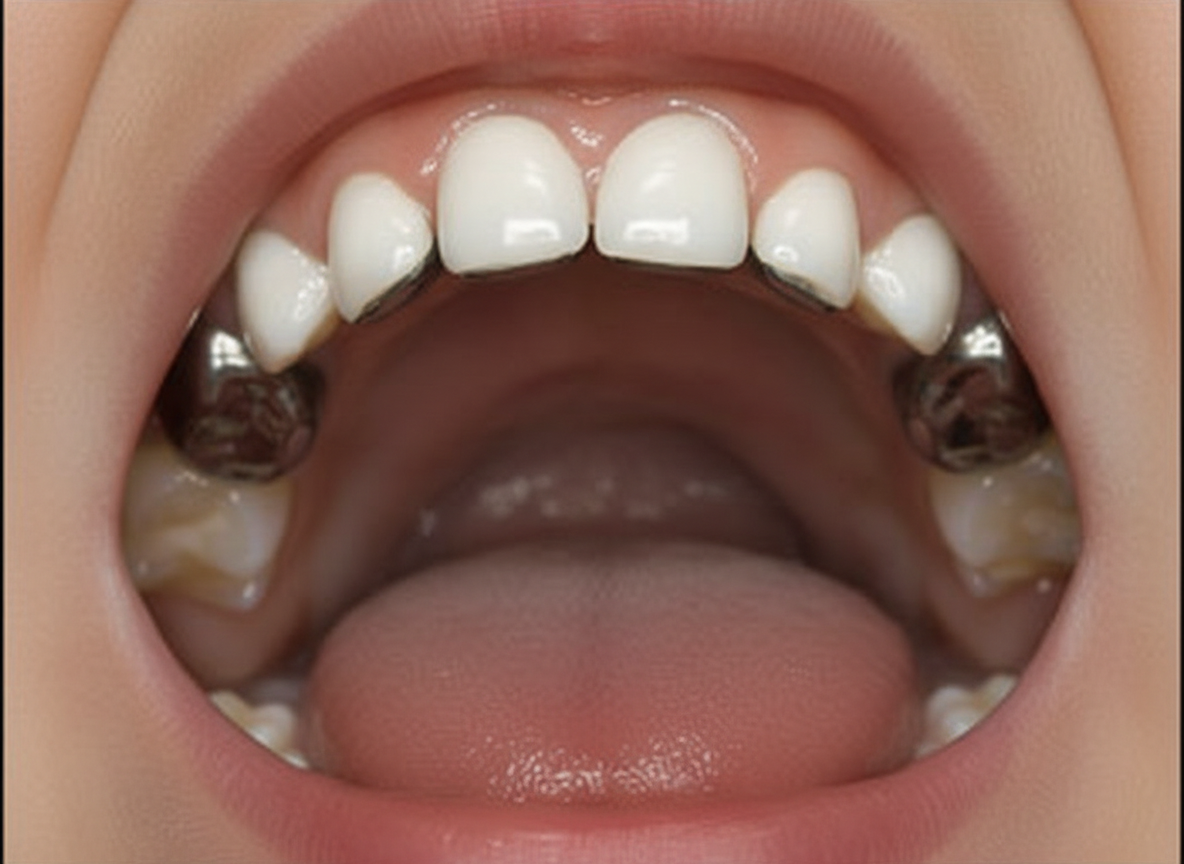
A silver crown has a white cover on its front side.
AI-generated image · not a real patient · model shown

White-facing silver crowns

A silver metal cap with a white cover on the front. The metal protects the tooth, and the white front helps it look more like a natural tooth.

What to expect

During the visit

The dentist usually numbs and shapes the tooth, then glues on the cap. Some silver may still show from the back or near the gum.

After the visit

Wait until numbness is gone before chewing. Brush around the gum and avoid sticky candy. Call if the cap comes loose or its white front breaks.

Good to know

These are also called pre-veneered crowns. The white cover can chip and show the silver underneath. The dentist can explain other crown choices.

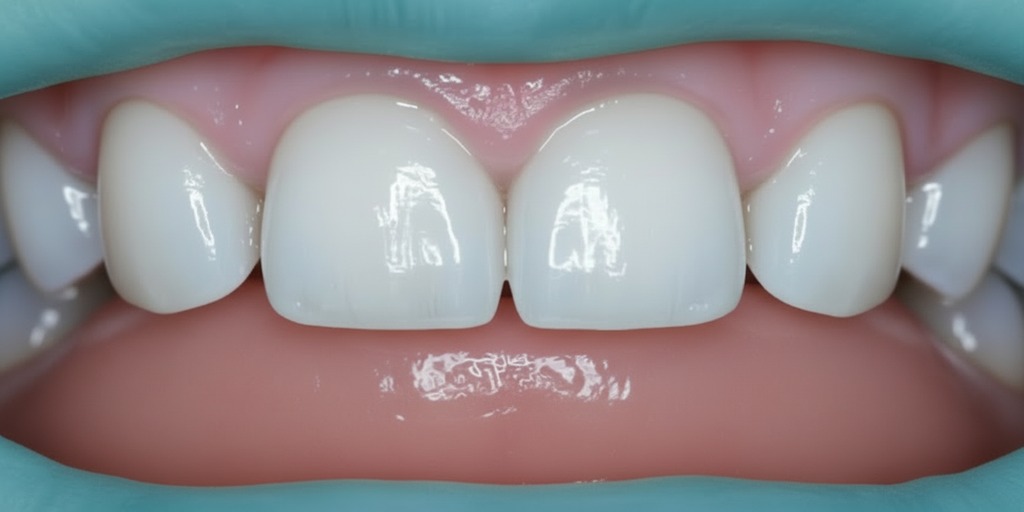
A close-up of a child’s front teeth restored with smooth, all-white zirconia crowns.
AI-generated image · not a real patient · model shown

Zirconia crowns

White caps made from a strong ceramic, not metal. They cover and protect a tooth with a large cavity or damage.

What to expect

During the visit

The dentist usually numbs the tooth and trims it so the cap fits. A zirconia crown often needs more tooth shaping than a silver crown.

After the visit

Wait until numbness is gone before chewing. Brush and clean between the teeth as shown. Call if the crown loosens or the bite hurts.

Good to know

Zirconia is tooth-colored all the way around. The best crown depends on the tooth, the size of the cavity, and your child’s needs.

An awake child wears a small nose hood for laughing gas.
AI-generated image · not a real patient

Nitrous oxide

Also called laughing gas. Your child breathes it with oxygen through a small nose hood to feel calmer during dental work. They stay awake.

What to expect

During the visit

Your child can hear and respond to the dentist. They may feel warm, light, or tingly. The team watches them and gives oxygen afterward. A numbing shot may still be needed.

After the visit

The gas wears off quickly. The team checks that your child feels back to normal before leaving. Follow any extra rules if other medicines were also used.

Good to know

Some children feel sick to their stomach. Follow the clinic’s meal advice, and tell them about a stuffy nose, health conditions, or medicines. It does not work well if your child cannot breathe through their nose.

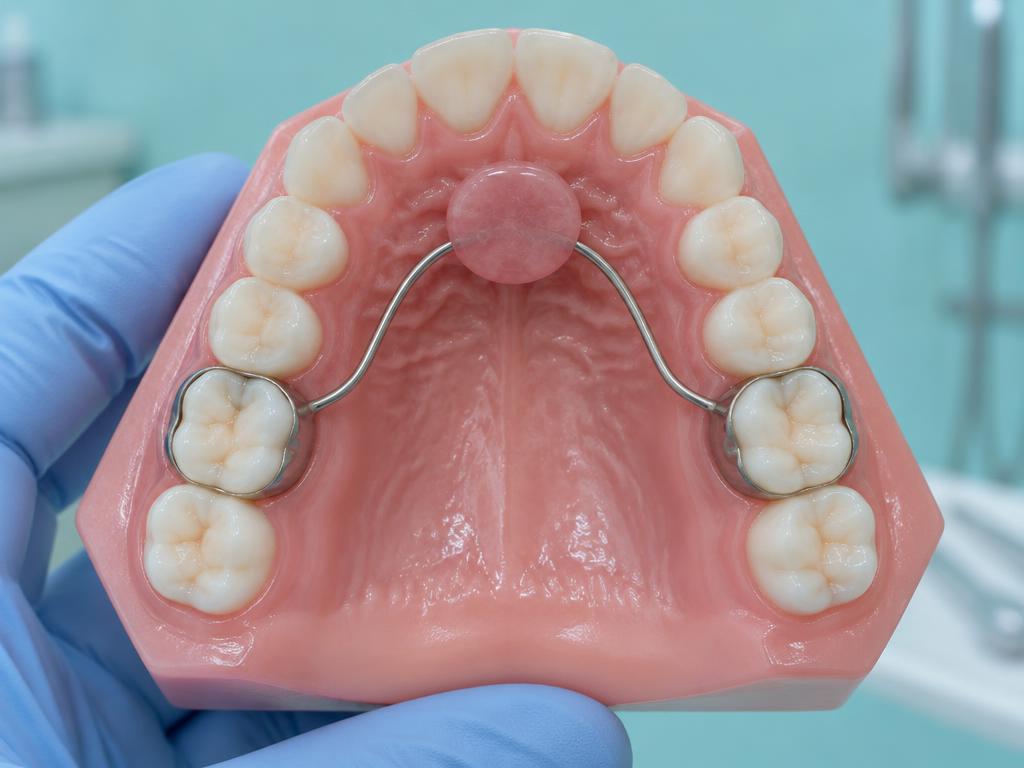
An upper wire joins two molar bands with a small pad resting on the roof of the mouth.
AI-generated image · not a real patient · model shown

Nance space maintainer

A wire that helps keep upper back teeth from moving forward. It has bands on back teeth and a small plastic pad on the roof of the mouth.

What to expect

During the visit

The dentist may take a mold or scan, then glue the fitted bands onto the teeth at another visit. The tongue may notice the pad at first.

After the visit

Brush around the bands and pad. Avoid sticky candy and do not play with the wire. Keep checkups so the dentist can watch the new teeth grow.

Good to know

It holds space; it does not replace a missing tooth. Call if the pad causes a sore spot or the device feels loose. The dentist decides when to remove it.

A wire follows the inside of the lower teeth and joins bands on the back molars.
AI-generated image · not a real patient

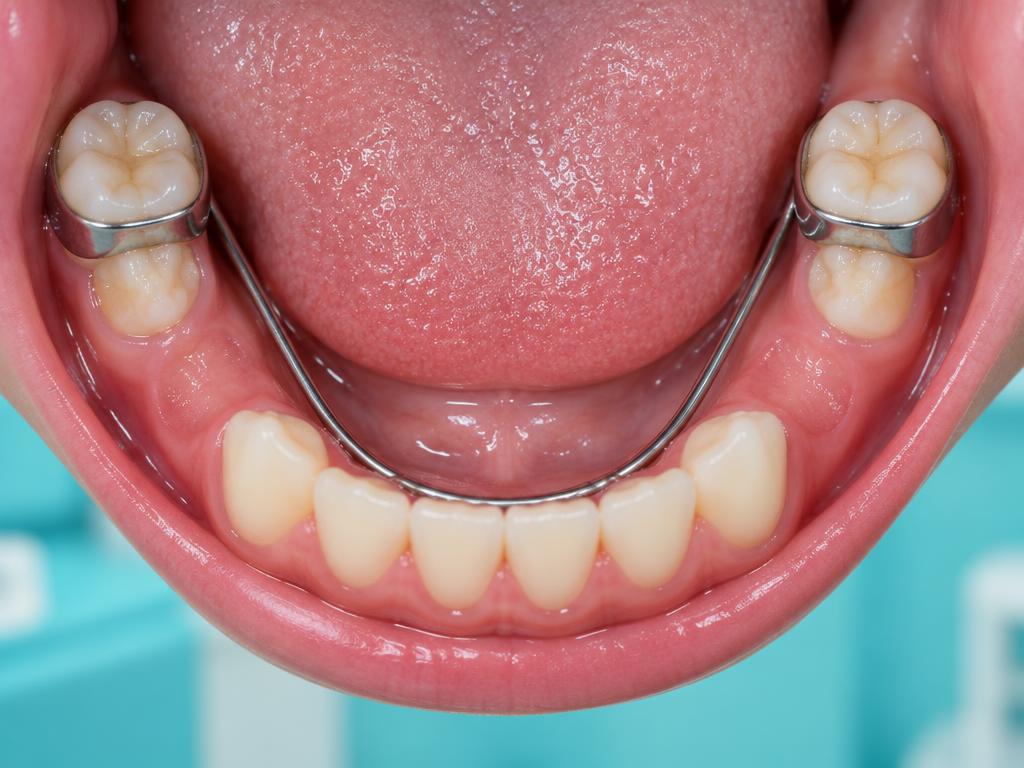
Lower lingual holding arch

A wire along the tongue side of the lower teeth. Bands on the back molars hold it in place to help save room for growing adult teeth.

What to expect

During the visit

The dentist fits the bands and wire, often after a mold or scan. It is usually used after the lower adult front teeth have come in. The tongue may need time to get used to it.

After the visit

Brush around the wire and bands. Avoid sticky candy, ice, and chewing on pens. Keep visits to check the fit as teeth grow.

Good to know

It is also called an LLHA. Do not bend or pull the wire. Call if it breaks, comes loose, or rubs the tongue.

A band on one tooth holds a wire loop across the space left by a missing baby tooth.
AI-generated image · not a real patient · model shown

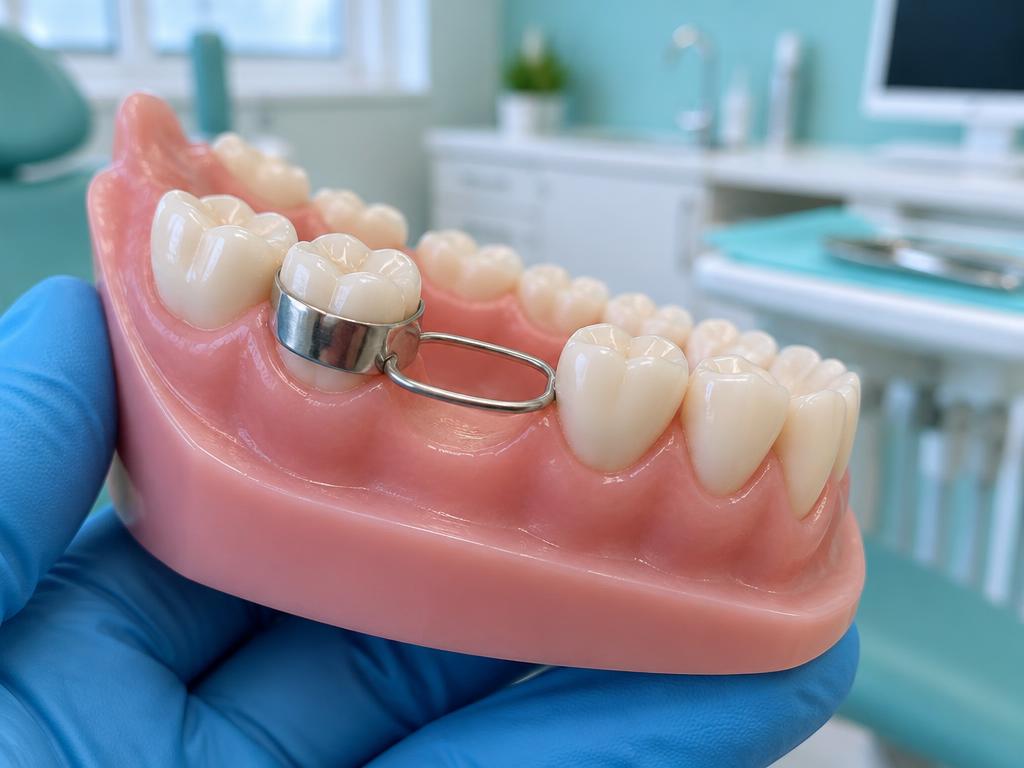
Band-and-loop space maintainer

A small metal band on one tooth with a wire loop across a gap. It helps keep nearby teeth from moving into the space of a baby tooth lost early.

What to expect

During the visit

The dentist fits or makes the device and glues the band onto a nearby tooth. The loop reaches across the gap to touch the tooth on the other side.

After the visit

Brush around the band and clean as shown. Avoid sticky candy and do not wiggle the loop. Return for checks while the adult tooth grows.

Good to know

The loop is not a tooth to chew on. Not every lost baby tooth needs one. Call if it is loose; the dentist must check or remove it as the new tooth comes in.

A dentist shows permanent tooth removal on a dental model with long roots.
AI-generated image · not a real patient · model shown

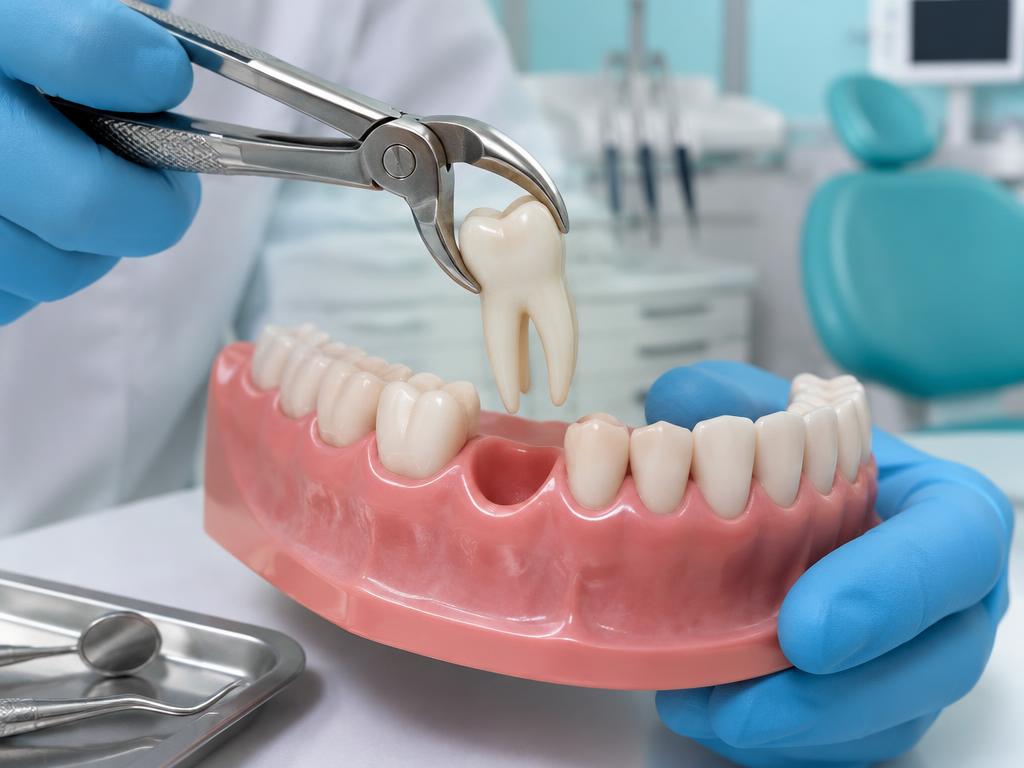
Adult tooth extraction

Taking out a permanent tooth. A dentist may suggest this if a tooth cannot be saved or if space is needed as part of a planned treatment.

What to expect

During the visit

The dentist checks the tooth and may take an X-ray. Numbing medicine helps block pain. Your child may feel pushing, but should tell the dentist if they feel sharp pain. Some teeth need a small surgery.

After the visit

Bite on gauze as told. Choose cool, soft foods and protect the blood clot. Do not use straws, spit, or rinse hard on the first day. Follow the dentist’s brushing and pain medicine plan.

Good to know

A permanent tooth will not grow back. Ask how the gap will be managed. Call for bleeding that will not stop, fever, or worsening pain or swelling. Trouble breathing needs emergency help.

A dentist shows baby tooth removal on a small dental model.
AI-generated image · not a real patient · model shown

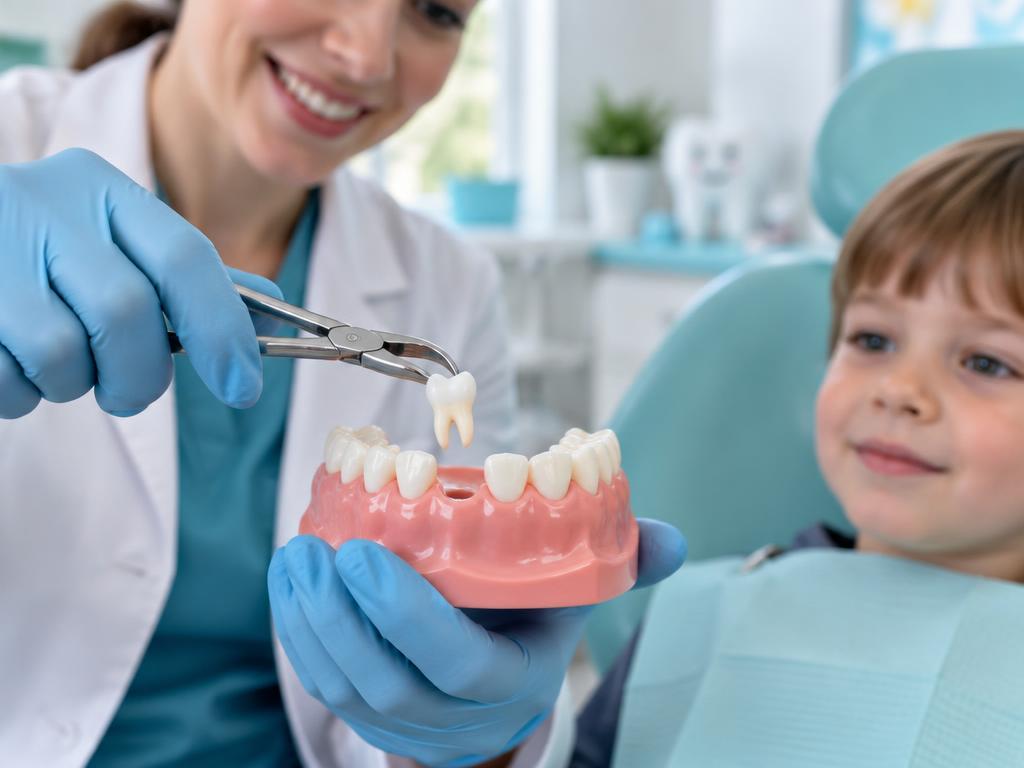
Primary tooth extraction

Taking out a baby tooth. This may be needed for a badly damaged or infected tooth, or a baby tooth that blocks an adult tooth.

What to expect

During the visit

The dentist checks the tooth and numbs the area. Your child may feel pressure as the tooth is loosened and removed. Gauze helps stop the bleeding.

After the visit

Follow the gauze instructions and offer cool, soft foods. Avoid straws, hard rinsing, and spitting on the first day. Watch for lip or cheek biting while the mouth is numb.

Good to know

If a baby tooth is lost early, ask if a space maintainer is needed. Call for bleeding that will not stop, fever, or worsening pain or swelling. Trouble breathing needs emergency help.

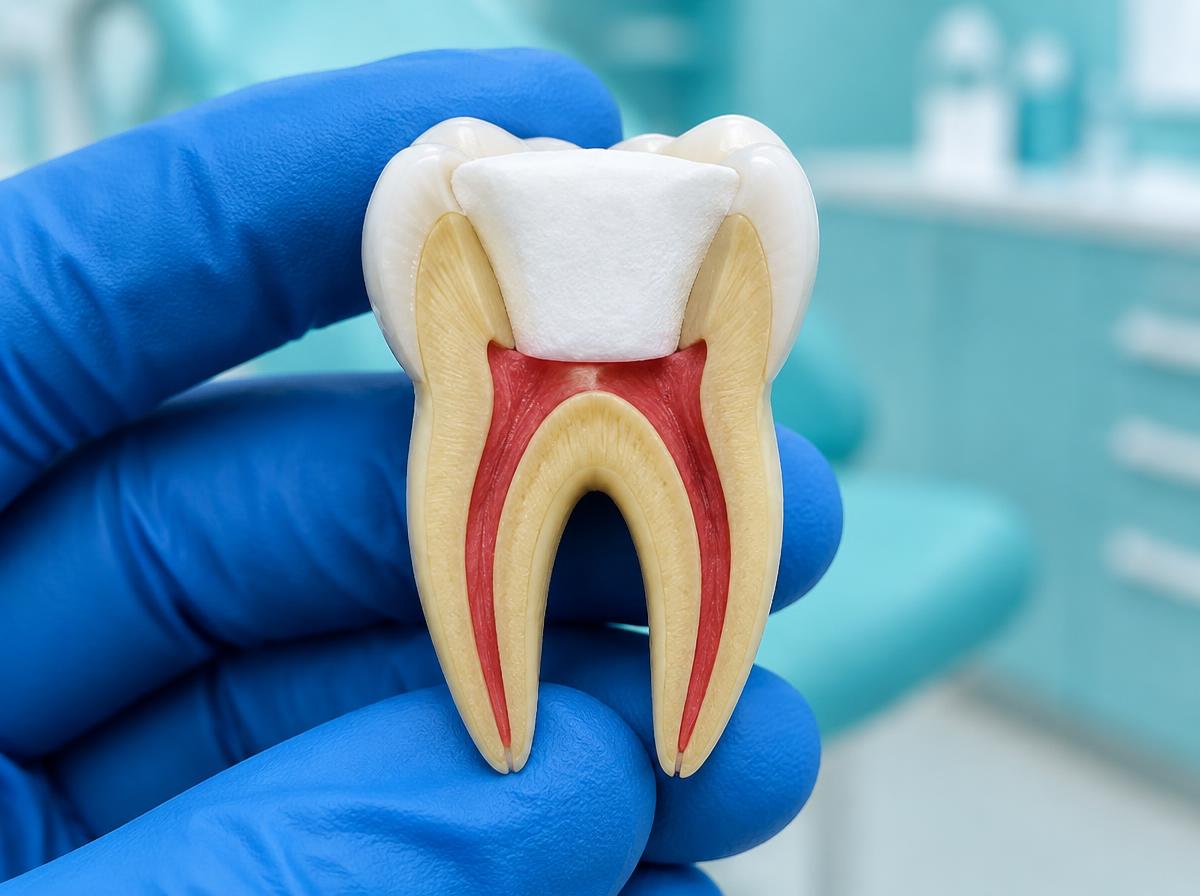
A cutaway tooth model shows a treated top chamber and pulp left in the roots.
AI-generated image · not a real patient · model shown

Pulpotomy

A treatment for the soft tissue inside a tooth, called pulp. The dentist removes the hurt tissue in the top part while keeping healthy tissue in the roots.

What to expect

During the visit

The tooth is made numb. The dentist cleans the top inside part and places a special material to protect the tissue left behind. A baby molar often gets a crown afterward.

After the visit

Wait until numbness is gone before chewing. Brush gently and follow the dentist’s pain-care advice. Return for exams and X-rays to check healing.

Good to know

This is not the same as a pulpectomy. It works only when the tissue left in the tooth can stay healthy. Call if pain, swelling, or a gum bump appears. Some adult teeth can also have this treatment.

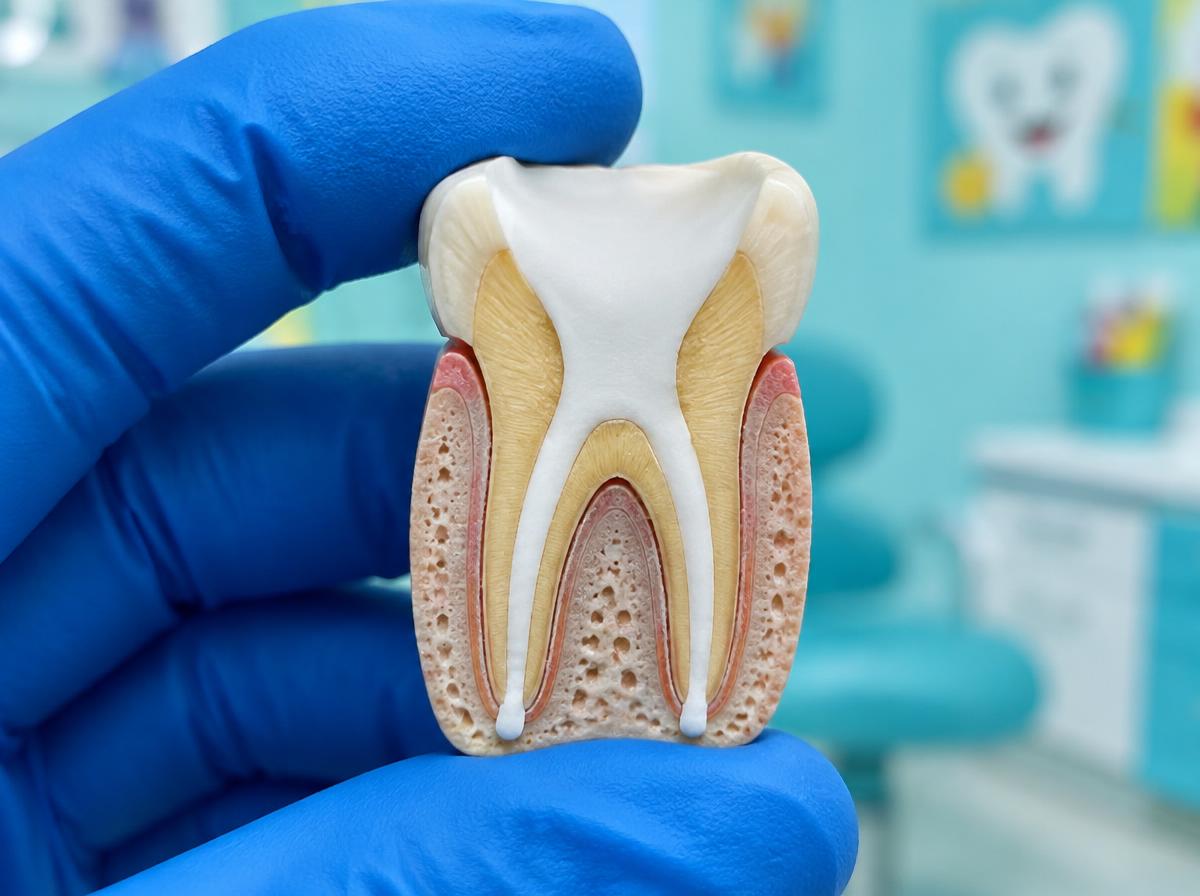
A cutaway tooth model shows filling material in the top chamber and root canals.
AI-generated image · not a real patient · model shown

Pulpectomy

A way to save some infected baby teeth. The dentist removes sick or dead soft tissue from both the top of the tooth and the tiny canals inside its roots.

What to expect

During the visit

The tooth is made numb. The dentist cleans the inside and fills the root spaces with a material that can break down as the baby tooth’s roots shrink. The tooth is sealed, often with a crown.

After the visit

Wait until numbness is gone before chewing. Follow the dentist’s pain-care plan and keep follow-up visits and X-rays.

Good to know

Unlike a pulpotomy, this cleans the root canals too. Not every infected tooth can be saved. Call if pain or swelling returns. Root canal care for adult teeth uses a different plan.

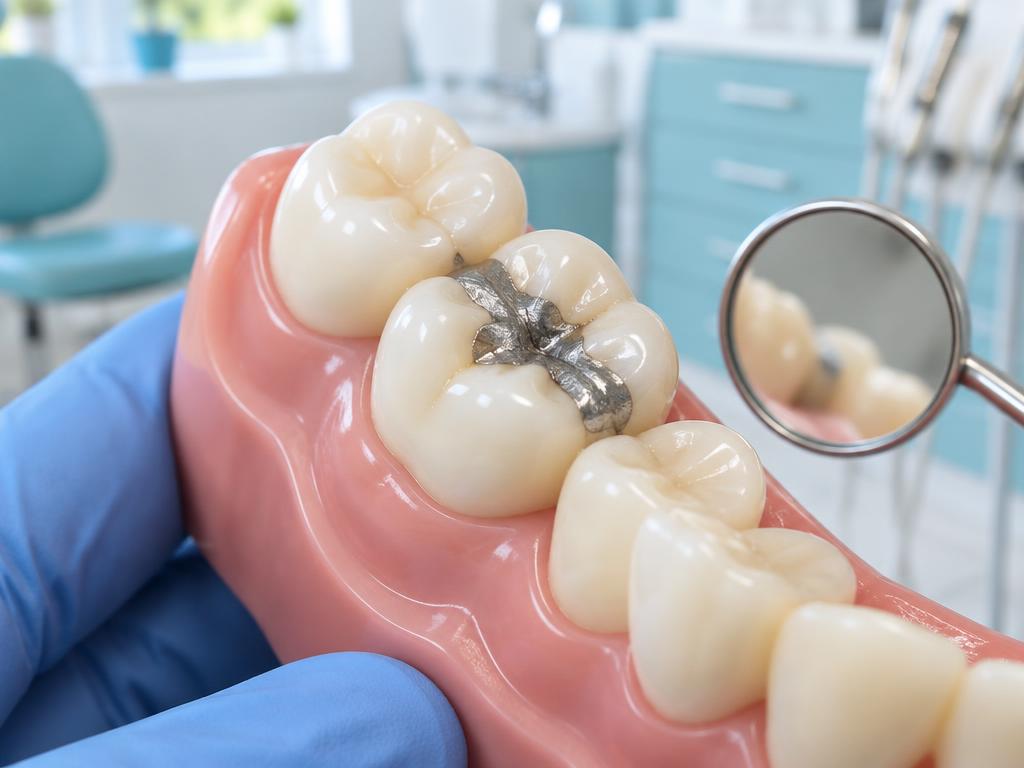
A silver-colored filling repairs the chewing surface of a tooth.
AI-generated image · not a real patient · model shown

Amalgam restoration

A silver-colored filling made from a mix of metals, including mercury. It repairs a hole left by a cavity, often in a back tooth.

What to expect

During the visit

The dentist may numb the tooth, remove decay, and pack the filling into the space. The filling is shaped so your child can bite comfortably.

After the visit

Ask how long to wait before chewing on the filling while it hardens. Watch for cheek biting while numb. Call if pain gets worse or the bite feels too high.

Good to know

The FDA advises avoiding new amalgam fillings when possible in higher-risk groups, including children, especially under age 6. Ask about other fillings. A sound existing filling should not be removed just because it contains mercury.

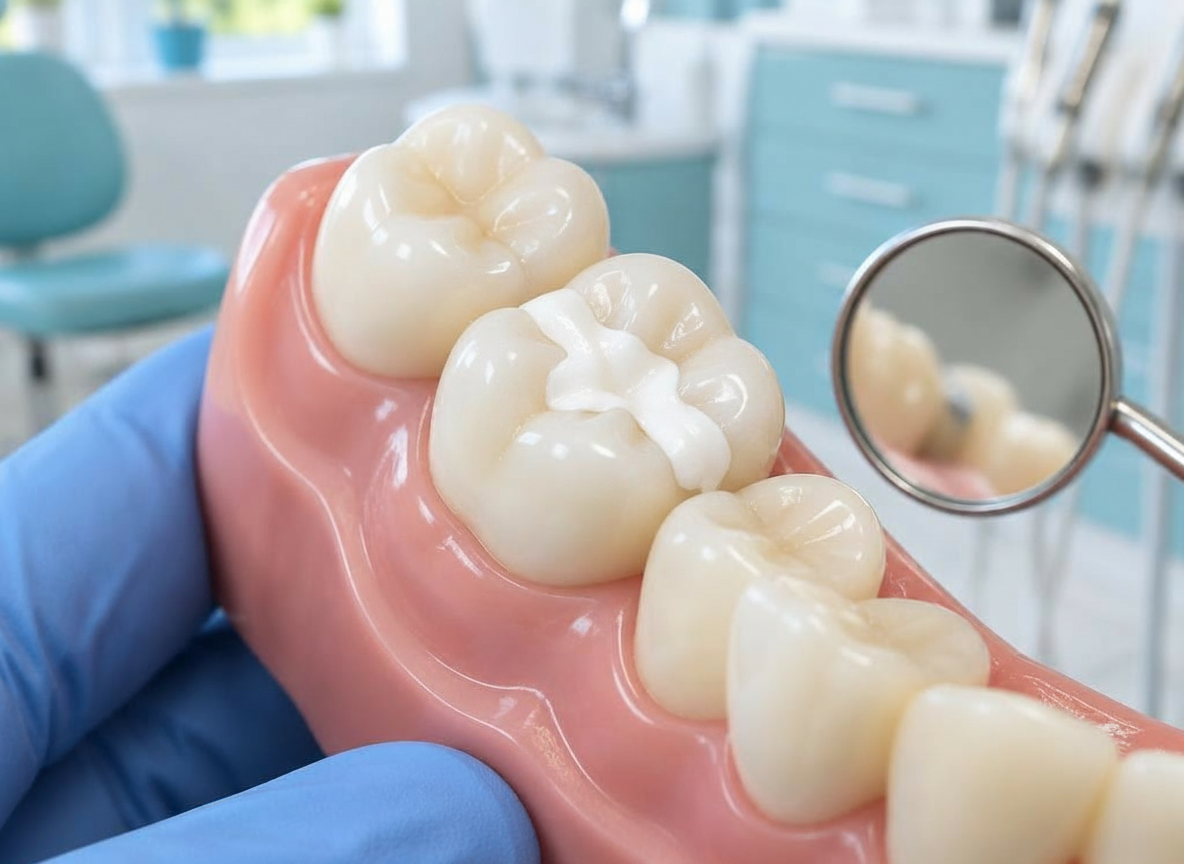
A tooth-colored filling repairs the chewing surface of a tooth.
AI-generated image · not a real patient · model shown

Composite restoration

A tooth-colored filling made from resin and tiny glass bits. It fills a cavity and blends in with the tooth.

What to expect

During the visit

The dentist may numb the tooth and remove decay. The tooth is kept dry while the filling is placed. A special light hardens it, then the dentist checks the bite.

After the visit

The filling is hard when you leave, but wait until numbness is gone before chewing. Some brief sensitivity can happen. Call for lasting or worsening pain or a bite that feels too high.

Good to know

This is also called a white filling. A very large cavity may need a crown instead. Brushing and cleaning between teeth help stop new decay around the filling.

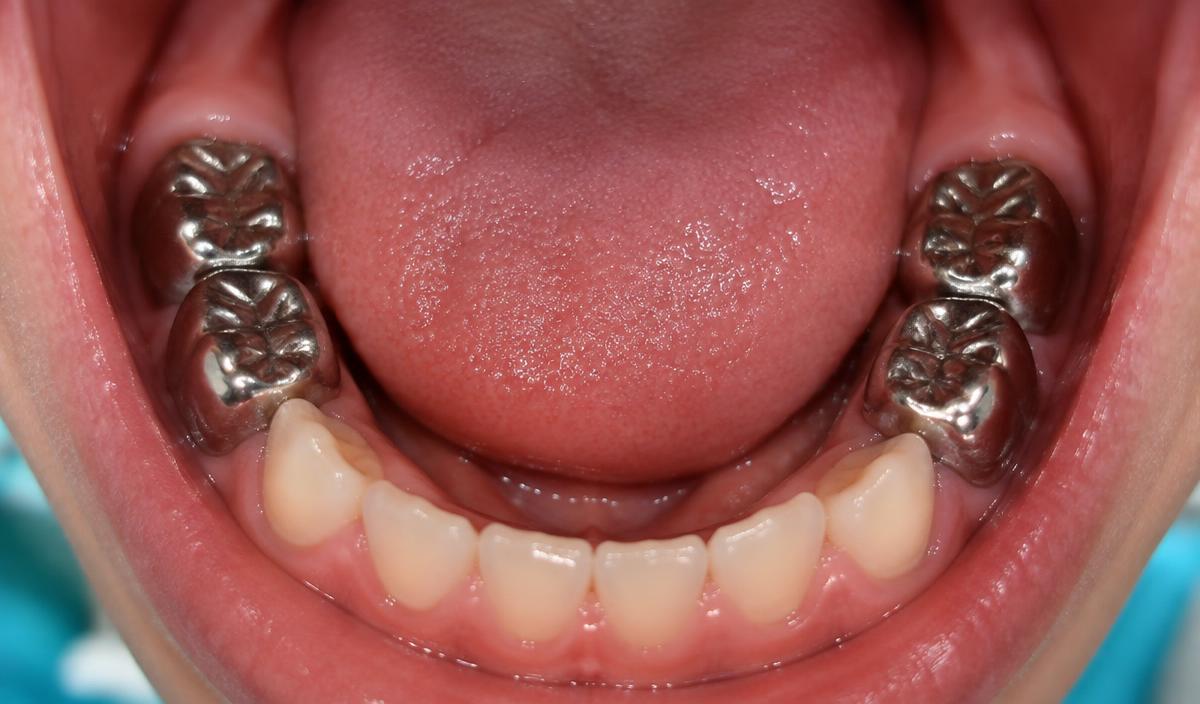
Close-up of a child's lower teeth with four shiny stainless steel crowns on the back baby molars.
AI-generated image · not a real patient

Stainless steel crown

A strong silver cap that covers the whole tooth. It often protects a baby back tooth with a large cavity or after treatment inside the tooth.

What to expect

During the visit

The dentist numbs and shapes the tooth, then fits and glues on the crown. Your child may feel pressure from the bite being open.

After the visit

Wait until numbness is gone before chewing. Brush near the gum and avoid sticky candy. Call if the cap comes loose or pain does not settle.

Good to know

It is also called an SSC. On a baby tooth it usually stays until the tooth falls out. Tell the dentist about metal allergies before choosing a crown.

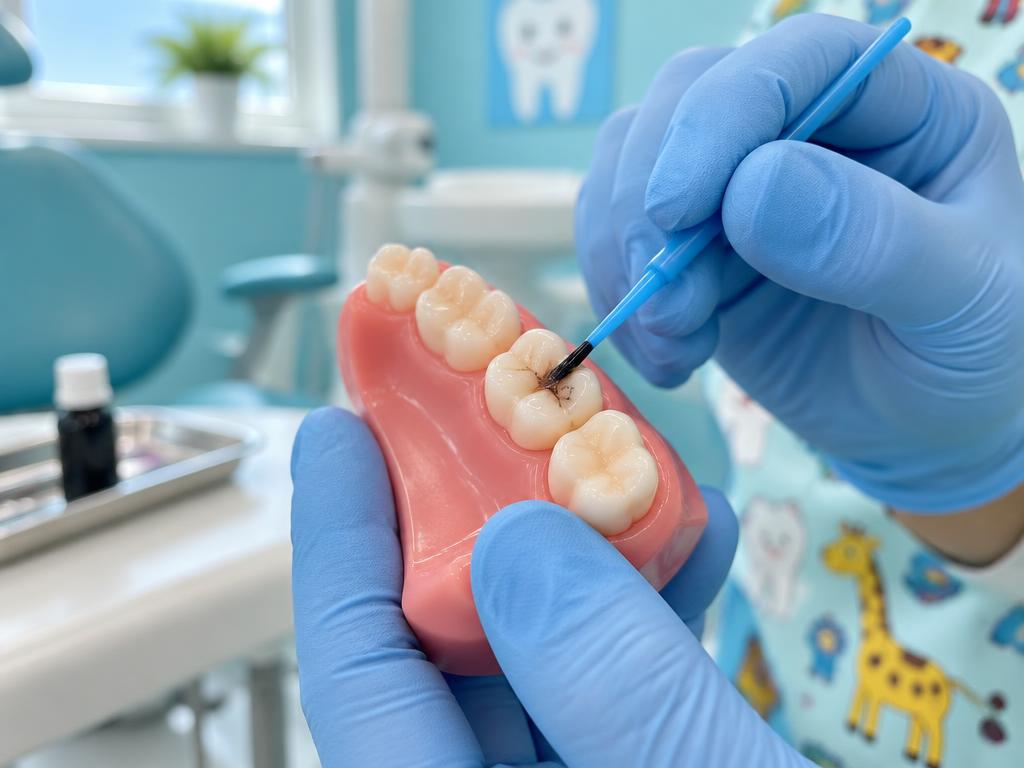
A small brush places silver diamine fluoride on decay, which turns dark.
AI-generated image · not a real patient · model shown

Silver diamine fluoride

A liquid called SDF that is painted on a cavity to help slow or stop decay. The silver fights germs, and the fluoride helps harden the tooth.

What to expect

During the visit

The dentist dries the tooth and uses a tiny brush to place the liquid. There is usually no drill or numbing shot. Your child may notice a bitter or metal taste.

After the visit

Follow the dentist’s eating advice and keep brushing. The tooth needs checks, and SDF may need to be applied again. A filling or crown may still be needed.

Good to know

SDF permanently turns decayed areas black. It does not fill a hole or treat an infection deep inside a tooth. Tell the dentist about silver allergies or mouth sores. In the U.S., its use to stop cavities is off-label, meaning this use is not the one listed in its FDA clearance.

A small dental mirror checks the chewing surface of a tooth.
AI-generated image · not a real patient

Dental checkup

A gentle look at your child’s teeth, gums, bite, and growth. Regular visits help find problems early.

What to expect

During the visit

The dentist may count teeth, check the gums, clean teeth, and take X-rays if needed. You can ask questions about brushing, food, or any tooth pain.

After the visit

Your child can eat and play as usual unless a treatment was also done. Ask when to return; the timing depends on your child’s needs.

Good to know

Plan the first visit by age 1, or within 6 months of the first tooth, whichever comes first.

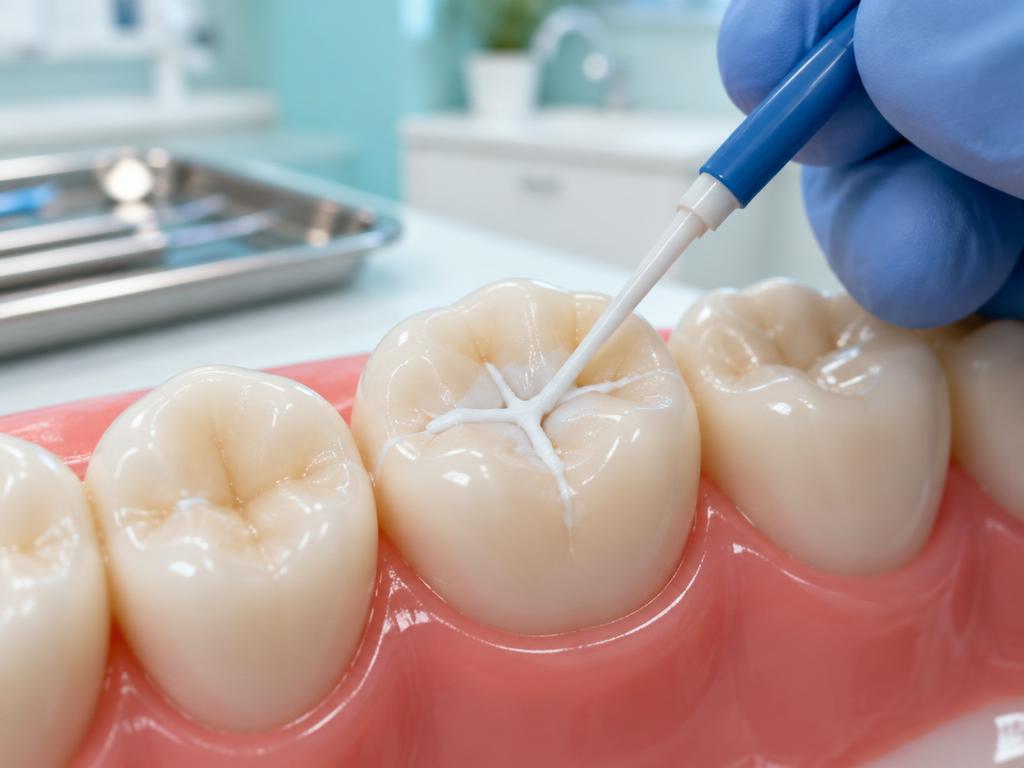
A thin protective coat fills the grooves on a back tooth.
AI-generated image · not a real patient · model shown

Sealants

Thin covers that protect the grooves on back teeth. They help keep food and cavity germs out of those hard-to-clean spots.

What to expect

During the visit

The tooth is cleaned, dried, and painted with the sealant. A special light may help it harden. No numbing shot is usually needed.

After the visit

Your child can usually eat right away. Keep brushing and flossing. The dentist checks the sealants at later visits and repairs them if needed.

Good to know

Sealants help prevent cavities, but do not replace brushing with fluoride toothpaste.

Healthy habits at home

Care that grows with your child

Small steps each day help stop cavities and make dental visits easier.

Birth to 2 years

Start care before the first tooth

Wipe gums with a clean, damp cloth. When the first tooth comes in, brush twice a day with a soft, small brush.

  • Use a tiny smear of fluoride toothpaste, about the size of a grain of rice.
  • Plan the first dental visit by age 1, or within 6 months of the first tooth.
  • Do not put a baby to bed with a bottle of milk, formula, or juice.

Brush twice a day

Use fluoride toothpaste for two minutes.

Give water often

Save juice and sweets for special times.

When to call now

Some tooth problems should not wait.

Call your child’s dentist right away if you are worried. For trouble breathing or a serious injury, call emergency services.

  • A knocked-out adult tooth
  • Face swelling or fever
  • Bleeding that will not stop
  • Strong pain that keeps your child awake
  • A broken tooth with a sharp edge
  • A hit to the mouth with loose teeth
Knocked-out adult tooth? Hold it by the top, not the root. If dirty, rinse it gently. Put it back in place if you can, or keep it in milk. Get dental help at once. Never put a baby tooth back in.
Pediatric dentist-backed sources

This guide follows parent advice from the American Academy of Pediatric Dentistry and the American Dental Association. It is for learning, not for finding or treating a health problem. Your child’s dentist knows your child best.

Read AAPD parent resources